
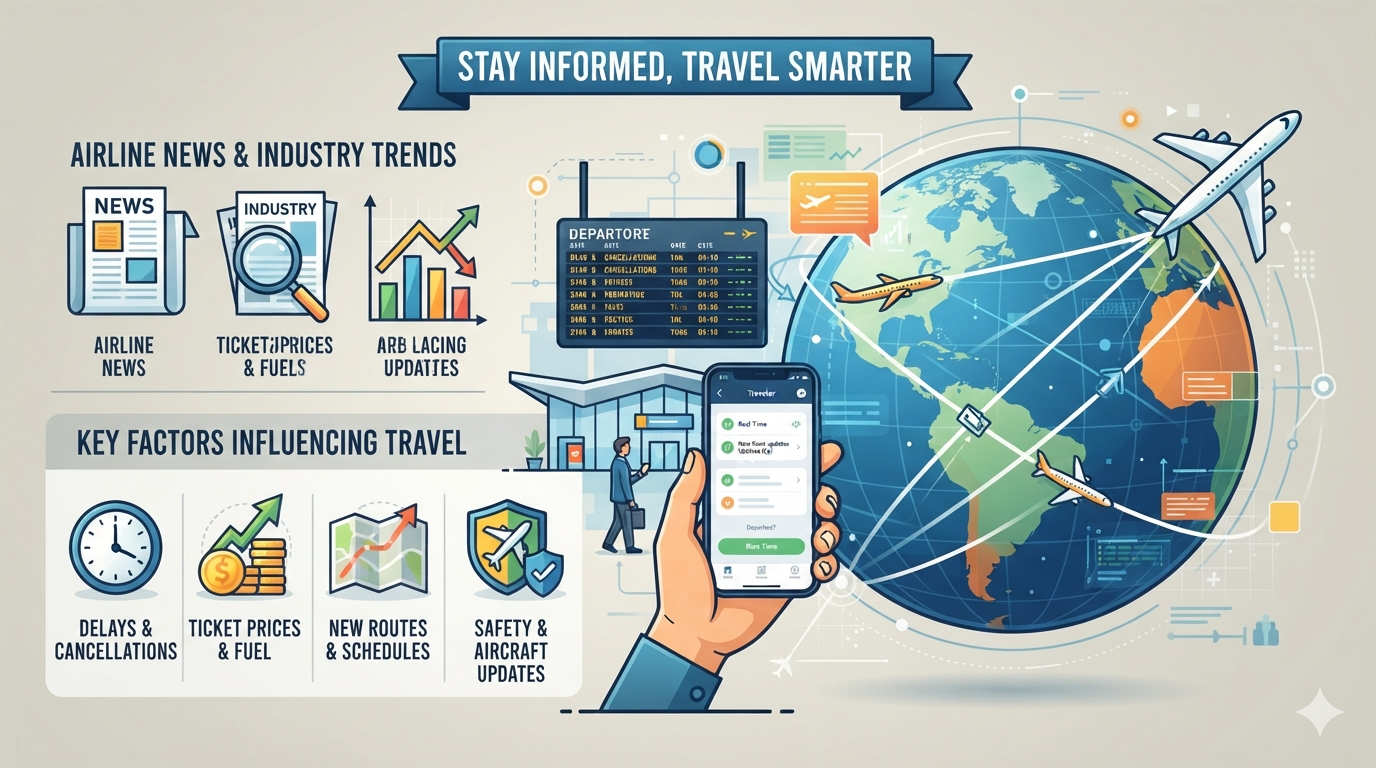
Air travel changes quickly. New routes open, flights get delayed, and ticket prices move often. That is why following airline news can help travelers make better choices. It can also help business travelers plan their trips with less stress. The airline industry affects millions of passengers every day. Small changes can sometimes have a big effect on travel plans. A new airport rule may change your check-in process. A route change may affect your next holiday. Fuel prices can also influence ticket costs. Travelers should therefore look beyond simple flight schedules. They should understand the wider aviation industry and its major trends. This guide explains the most important areas to watch. It also covers flight delays, cancellations, routes, prices, safety, aircraft, and airport changes. The goal is simple. You should finish this article with a clearer view of modern air travel and the information worth checking before your next flight.
What Is Airline News?
Airline news covers important developments involving airlines, airports, aircraft, routes, passengers, and aviation businesses. It can include many different topics. For example, an airline may announce a new international route. Another carrier may reduce flights because of weak demand. An airport may open a new terminal or change its security process. Airlines may also introduce new aircraft, technology, or passenger services. These stories can directly affect travelers. Business changes can affect ticket availability and schedules. Weather events can cause delays and cancellations. Government decisions can also change travel rules. Good airline reporting should explain what happened and why it matters. Travelers should also check official airline and airport sources before making important decisions. News reports provide useful context, but flight information can change quickly. A smart traveler uses both sources. This simple approach can reduce confusion and make travel planning easier.
Why Airline News Matters to Travelers
Keeping up with airline news is useful because travel plans depend on many moving parts. A flight can change after you book your ticket. Airlines sometimes adjust schedules based on demand, aircraft availability, or operational needs. Airport conditions can also affect your journey. A delayed first flight may cause you to miss a connecting flight. Route changes can create longer travel times. Ticket prices can rise when demand increases. Travelers who watch major updates may spot these changes earlier. This can give them more time to adjust their plans. I also recommend checking your airline app before leaving home. Do not rely only on an old booking email. Your latest flight status is more important. This simple habit takes less than a minute. Yet it can prevent hours of unnecessary waiting at the airport.
Major Airline Industry Trends
The global aviation industry continues to change as passenger needs evolve. Airlines are investing in better digital services and more efficient aircraft. Mobile check-in is now common with many carriers. Digital boarding passes can also make airport visits easier. Airlines are studying customer demand before adding new routes. Popular destinations may receive more flights during busy periods. Less popular routes may see fewer services. Aircraft efficiency is another major industry focus. New planes can help airlines reduce fuel use and operating costs. Sustainability is also receiving greater attention across aviation. Airlines are exploring sustainable aviation fuel and other solutions. However, major changes take time. Aircraft orders, airport upgrades, and fuel systems require large investments. Travelers may notice these changes through better technology, different aircraft, and changing route networks.
Flight Delays and Cancellations
Flight delays are among the most common travel problems. They can happen for many reasons. Bad weather is one major cause. Aircraft maintenance can also delay a flight. Airport congestion creates another challenge. Crew availability may affect operations as well. Sometimes delays happen because an earlier flight arrived late. A single disruption can therefore affect several later flights. Cancellations can create even bigger problems. Travelers may need another flight, hotel, or transport. Your airline’s policies usually explain what happens next. Passengers should save booking details and important travel documents. If your flight changes, check the airline’s official app first. Airport information screens can also provide useful updates. Avoid relying only on social media posts. Online comments may be old or incorrect. Reliable information is especially important during major disruptions.
How Airline Routes Are Changing
Airline routes change as airlines respond to demand and business conditions. A carrier may launch a new nonstop flight between two cities. Another airline may reduce service on an older route. Seasonal demand often affects these decisions. Tourist destinations can become busier during holiday periods. Business routes may have stronger demand during working seasons. New routes can also improve travel connections. Passengers may reach destinations without changing planes. This can save time and reduce connection risks. Travelers should watch route announcements when planning future trips. A new service could provide a faster or cheaper option. However, a route announcement does not always mean daily flights will begin immediately. Airlines may start with limited schedules. Always check the actual operating dates before booking hotels or other travel services.
Airline Ticket Prices and Airfare Trends
Airfare prices can change many times before departure. Several factors influence the final price. Demand is one important factor. Flights with many available seats may have lower prices. Popular flights can become more expensive as seats disappear. Travel dates also matter. Weekend and holiday flights can cost more in many markets. Competition between airlines may also influence fares. A new route can sometimes create more pricing choices. Travelers should compare the complete trip cost. A cheap ticket may have extra baggage or seat fees. Another fare may include useful benefits. Look at the total cost before making your decision. Flexible travelers can sometimes save money by changing travel dates. However, there is no single booking rule that always produces the lowest fare. Compare several options and read the fare conditions carefully.
New Aircraft and Aviation Technology
Aircraft technology is an important part of modern airline news. Airlines continue to add newer planes to their fleets. Modern aircraft can offer improved fuel efficiency and passenger comfort. New cabin designs may provide better storage and entertainment systems. Some aircraft also offer faster internet connections. Digital technology is changing the airport experience too. Travelers can use mobile apps for check-in and flight updates. Some airports use automated systems to improve passenger processing. These technologies aim to make journeys faster and easier. However, technology is not perfect. Systems can sometimes experience outages or technical problems. Travelers should therefore keep important booking details accessible. A phone battery can also become a problem during long travel days. Carrying a charging cable or power bank can be useful when permitted under current airline rules.
Airport News and Passenger Experience
Airport changes can have a direct impact on your journey. New terminals may provide more gates and better passenger facilities. Security procedures can also change over time. Construction may affect roads, parking, or walking routes. Busy airports can become difficult to navigate during peak periods. Travelers should check airport information before leaving home. This is especially important for unfamiliar airports. Give yourself enough time for check-in and security. International flights may require additional document checks. Connecting passengers should also understand their transfer process. Some airports require passengers to clear security again. Others may require immigration or customs procedures during connections. Airport news can help explain these changes. Still, official airport instructions should remain your main source before travel.
Airline Safety and Passenger Trust
Safety remains one of the most important areas of the aviation industry. Airlines follow many rules covering aircraft maintenance, crew training, operations, and security. Aviation authorities also monitor airlines and airports. Safety information can sometimes appear confusing in online discussions. Travelers should focus on verified information from trusted sources. A dramatic headline does not always explain the full situation. When an aviation incident occurs, investigations may take time. Early reports can change as more facts become available. Responsible reporting should separate confirmed information from speculation. Passengers should avoid sharing unverified claims during emergencies. Trustworthy airline news should provide clear facts and useful context. This helps readers understand events without creating unnecessary fear.
Airline Customer Service and Passenger Rights
Passenger service is another important part of modern air travel. Airlines handle millions of travelers, but problems can still happen. Baggage may arrive late. Flights can change. Seats may be reassigned. Connections can also become difficult during disruptions. Passenger rights depend on the country, route, and specific situation. Some regions have stronger compensation rules than others. Travelers should understand the terms connected to their ticket. Keep receipts when you face eligible expenses during a disruption. Save airline messages and booking information as well. These records may help when making a complaint. Always check the official rules that apply to your journey. Do not assume that another country’s passenger rights apply to your flight. Clear information can help you understand what support may be available.
How Weather Affects Air Travel
Weather has a major effect on airline operations. Storms, heavy snow, strong winds, and poor visibility can affect flights. Severe weather may close runways or reduce airport capacity. Even weather far from your location can affect your flight. Your aircraft may arrive from another city before operating your flight. If that earlier flight is delayed, your journey may also be delayed. This is why checking weather alone is not enough. Check your flight status close to departure. Airlines often update passengers through mobile apps and messages. During major weather events, schedules may change quickly. Avoid arriving extremely early without checking your flight first. At the same time, do not leave home until the airline confirms your flight is operating. Balance preparation with the latest available information.
Airline Partnerships and Alliances
Airlines often work together to expand their networks. Partnerships can connect passengers to more destinations. They can also simplify connections between different carriers. Frequent travelers may benefit from shared loyalty programs or airport services. Codeshare agreements are another common feature. Under these arrangements, one airline may sell a flight operated by another carrier. This can sometimes make booking easier. However, travelers should check which airline actually operates each flight. Baggage rules and seat policies can differ. A connection between partner airlines may also involve different procedures. Reading the booking details carefully can prevent surprises. Airline partnerships are useful, but passengers should understand the exact terms. This becomes especially important for international journeys with multiple carriers.
What Travelers Should Check Before Flying
Before every trip, check your booking information again. Start with the flight number and departure time. Then check the airline’s latest flight status. Review the baggage allowance for your ticket. Make sure your travel documents are valid. International passengers should check visa and entry requirements. Also review airport instructions if you have a tight connection. Keep your boarding pass available on your phone. A backup copy can also be useful. If your phone battery is low, charging may become difficult. Travelers should also check their transportation to the airport. Traffic can change quickly in busy cities. Good preparation does not need to be complicated. A short checklist can protect you from many common travel problems. These simple habits make airline news more useful because you can connect industry changes with your own trip.
How to Follow Reliable Airline Updates
Not every travel story online is reliable. Social media can spread information very quickly. Unfortunately, speed does not always mean accuracy. Travelers should compare important claims with official sources. Check the airline’s website or mobile application first. Airport websites can provide additional operational information. Government aviation agencies may publish regulatory updates. Established news organizations can provide broader industry context. Look for the date of the information. Old stories can appear again during new travel disruptions. Also check whether the report refers to a confirmed announcement. A rumor about a new route is not the same as an official route launch. This approach helps readers separate useful airline news from speculation. Reliable information is especially important when money, visas, or international travel plans are involved.
Airline News: Quick Reference Table
| Topic | What It Covers | Why It Matters |
|---|---|---|
| Flight Updates | Delays, cancellations, schedule changes | Helps passengers plan |
| Airline Routes | New, changed, or removed routes | Affects destination choices |
| Airfare Prices | Ticket costs and fare changes | Helps travelers compare costs |
| Airport News | Terminal and security changes | Improves airport planning |
| Aircraft | New planes and fleet updates | Can affect comfort and efficiency |
| Safety | Incidents, rules, and investigations | Builds informed passenger decisions |
| Technology | Apps, check-in, and airport systems | Makes travel more convenient |
| Passenger Rights | Compensation and support rules | Helps travelers understand options |
| Weather | Storms and operational disruptions | Can affect flight schedules |
| Partnerships | Codeshares and airline alliances | Expands travel connections |
| Baggage | Allowances and baggage changes | Prevents unexpected fees |
| Sustainability | Fuel and efficiency programs | Shapes aviation’s future |
The Future of the Airline Industry
The future of aviation will likely focus on efficiency, technology, and customer needs. Airlines want aircraft that use less fuel. Airports want faster passenger processing. Travelers want simple booking and reliable communication. These goals are pushing the industry toward new solutions. Digital tools will likely become even more important. Mobile apps may handle more parts of the travel journey. Artificial intelligence may also help airlines manage operations and customer support. Sustainability will remain another major topic. Airlines and governments are exploring ways to reduce aviation emissions. However, the transition will require significant investment. Travelers should expect the industry to change gradually. New aircraft and airport systems will not appear everywhere at once. The best way to understand these developments is to follow reliable airline news and look for confirmed announcements rather than predictions.
Frequently Asked Questions
1. Why should travelers follow airline news?
Travelers can learn about route changes, delays, cancellations, airport updates, and airline policies. This information may help them prepare for changes before reaching the airport. It can also help passengers understand wider travel trends. However, travelers should always confirm flight-specific details with their airline.
2. What causes most flight delays?
Flight delays can have many causes. Weather, aircraft maintenance, airport congestion, crew issues, and earlier delays can all affect schedules. Some delays happen because several small problems occur together. Checking the latest flight status is the best way to understand your specific situation.
3. Can airline news affect ticket prices?
Yes. Changes in routes, competition, demand, fuel costs, and airline capacity can influence fares. Prices can also change based on travel dates and seat availability. However, a news story does not guarantee that prices will rise or fall. Travelers should compare actual fares before booking.
4. Where can I check my flight status?
The airline’s official website or mobile app is usually the best starting point. Airport websites and airport information screens can also help. Check the information close to departure because flight details can change during the day.
5. How can I avoid problems during a flight disruption?
Keep your booking details accessible and monitor your airline’s updates. Arrive prepared with important documents and necessary contact information. If your flight changes, follow the airline’s instructions. Keep receipts for eligible expenses if you believe you may need them later.
6. What airline trends should travelers watch?
Travelers should watch route changes, airfare trends, new aircraft, airport technology, passenger rules, and sustainability efforts. Digital services are also becoming more important. These trends can affect how people book flights, use airports, and experience air travel.
Conclusion
Following airline news is more than reading headlines about planes. It helps travelers understand the forces shaping their journeys. Flight schedules can change. Routes can open or close. Prices can move. Airports can update their systems. Weather can disrupt operations. New aircraft can change the passenger experience. The key is knowing which information matters to you. Always confirm important details through official airline and airport sources. Use reliable news reports for wider industry context. Do not depend on rumors or old social media posts. A few minutes of preparation can make a major difference. Whether you travel once a year or every week, staying informed can help you travel with greater confidence. Before your next trip, check the latest updates, review your booking, and prepare for possible changes. Good information is one of the simplest tools for a smoother journey.