
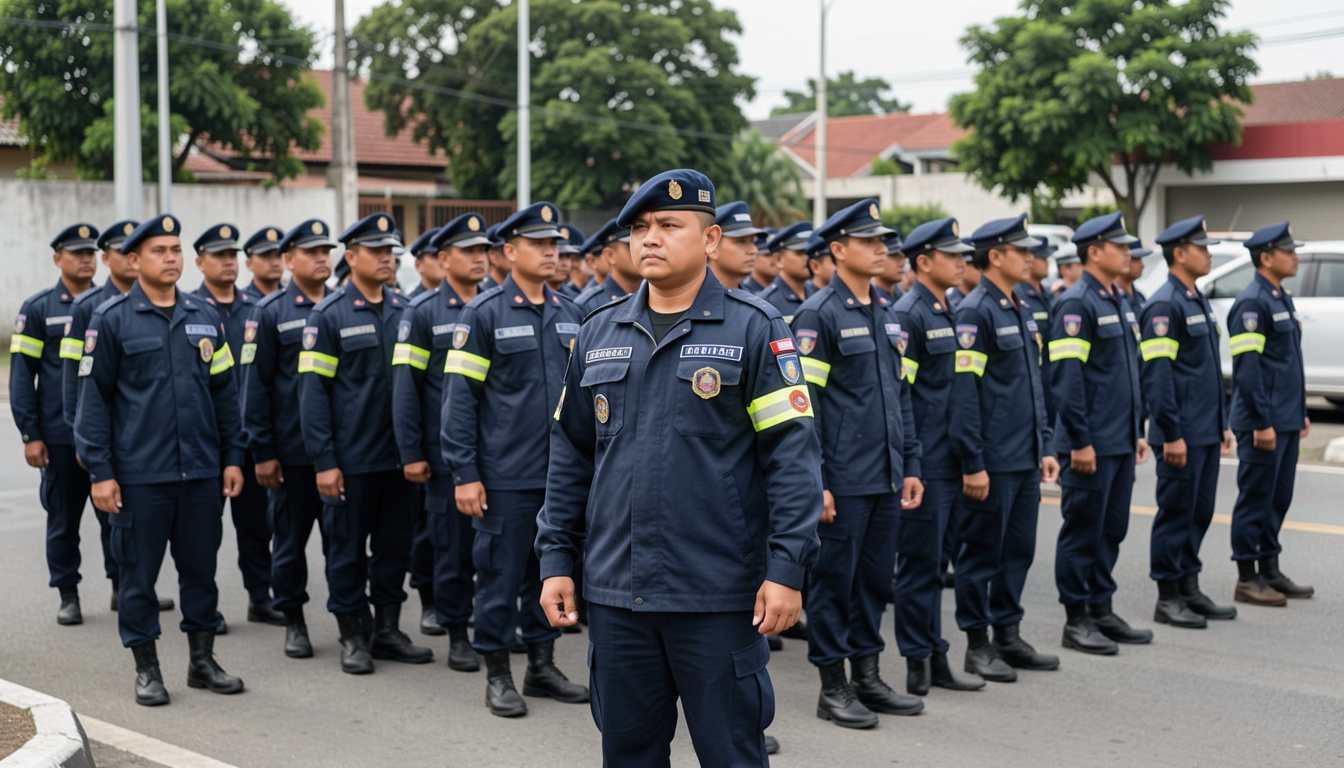
Have you ever seen people in uniform quickly helping during natural disasters or accidents? These dedicated individuals are often part of the korps sukarela. Being a volunteer is not just about helping others; it is a calling from the heart to make the world a better place. In many regions, this term is deeply linked to the spirit of mutual cooperation that has existed for generations. We will explore more deeply what this organization actually is and why its role is so crucial for our society today.
Many young people are interested in joining korps sukarela because they want to learn useful new skills. Here, you are not only taught how to provide first aid but are also trained to have a strong mental state under pressure. The world of volunteering offers life experiences that you simply cannot get in a regular classroom. Through this article, I will take you through every corner of this great organization, from its inspiring history to how you can make a real contribution in the field.
Table of Contents
Organization Profile: A Closer Look
Below is an essential information table regarding the general profile of this volunteer organization for a quick and easy reference.
| Detail | Full Information |
| Organization Name | Korps Sukarela (KSR) |
| Main Focus | Humanitarianism, Health, and Disaster Management |
| Working Principles | 7 Fundamental Principles of the Red Cross and Red Crescent |
| Member Requirements | Ages 18–35 (generally students or the general public) |
| Primary Training | First Aid (PP), Water Rescue, Field Kitchens, and Psychosocial Support |
| Main Motto | “Siamo Tutti Fratelli” (We Are All Brothers) |
The History of the Formation of Korps Sukarela
The history of korps sukarela is inseparable from the development of the Youth Red Cross and global humanitarian organizations. In Indonesia and beyond, this movement began to flourish alongside the need for well-organized medical aid personnel. Initially, the main focus was helping victims of war and conflict, but over time, it expanded to natural disaster response. The founders believed that every life is precious and must be saved regardless of background, religion, or race.
The development of korps sukarela has advanced rapidly in this modern era with the support of technology and professional management. Now, every unit in universities or districts has strict operational standards to ensure the safety of both volunteers and victims. I see firsthand how the spirit of the early pioneers still flows through the new members today. Studying history helps us appreciate every drop of sweat shed by our predecessors to uphold humanitarian values in our beloved land.
Main Duties of Volunteers During a Disaster
The primary duty of a korps sukarela member is to be on the front line during emergencies. When disaster strikes, they evacuate victims to safer places using appropriate equipment. Additionally, they are responsible for providing first aid for accidents before professional medical personnel arrive at the scene. The ability to stay calm and think clearly is the main asset every member must have in a situation full of chaos and panic.
Beyond physical tasks, korps sukarela also plays a vital role in providing logistics such as field kitchens and aid distribution. They ensure that refugees receive decent food and clean clothes while in temporary shelters. This task might look simple, but it is actually very exhausting and requires solid team coordination. Without their presence, disaster handling would certainly run much slower and be disorganized for the affected communities.
Essential Skills Every Volunteer Must Master
Every individual joined in korps sukarela must master basic medical skills, such as Cardiopulmonary Resuscitation (CPR) techniques. They are also trained in how to dress wounds and perform splinting on broken bones so that injuries do not worsen during transport. These skills are not only useful when on duty but are also very beneficial in daily life if a friend or family member has an emergency. The training provided is usually very intensive to ensure every volunteer is truly competent.
In addition to medical abilities, korps sukarela members must be proficient in communicating and working in both small and large groups. They often interact with people experiencing severe trauma, so a gentle psychological approach is needed. Leadership training is also frequently provided so they can make quick decisions in the field when necessary. Being a volunteer means you must be ready to keep learning and sharpening your skills so you are always ready whenever the humanitarian call comes.
Education and Training Levels within the Organization
To become a permanent member of korps sukarela, a person usually has to go through a fairly long series of basic education processes. This stage starts with an orientation period, where candidates are introduced to organizational values and volunteer ethics. After that, they will participate in field training that simulates real emergency conditions to test their mental strength. This process aims to filter out individuals who truly have a high commitment to the humanitarian mission.
After graduating from basic education, korps sukarela members are allowed to take specific specializations according to their interests and talents. Some choose to focus on water rescue, while others are more interested in psychosocial support for children who are disaster victims. All these levels are well-documented in the membership management system to ensure fair task distribution. My experience shows that this educational process is the most memorable time for every volunteer because this is where strong brotherhood begins to form.
The Important Role of Korps Sukarela on Campus
At the university level, korps sukarela is often the most active Student Activity Unit (UKM) in various social activities. They do not only move during disasters but are also active in conducting regular blood drives on their own campus. Students who join get a unique opportunity to hone soft skills that are not taught in regular academic classes. This makes graduates who are active in this organization tend to have higher empathy and excellent crisis management skills.
The involvement of korps sukarela on campus also helps create a safer environment for the entire academic community. They are often asked to be the medical team at large events such as orientation, sports competitions, or music concerts. With an alert team present, the risk of accidents can be minimized and initial handling can be done very quickly and accurately. This is real proof that community service can start from the smallest environment around us.
Ethics and Code of Conduct for Volunteers
Being part of korps sukarela means you must uphold a code of ethics that prohibits any form of discrimination while helping. Volunteers must not take sides in political or military conflicts and must always maintain neutrality to be accepted by all parties. Honesty and integrity are non-negotiable for every member when managing aid from donors so that it reaches the right hands. Public trust is the main asset that allows this organization to survive and grow.
Every action taken by a korps sukarela member must be based on pure humanitarian principles without expecting material rewards. They are trained to maintain the confidentiality of victims’ personal data and respect local customs wherever they are assigned. Violating this code of ethics can result in severe sanctions, including dishonorable discharge. Discipline in following these ethics is what distinguishes a true volunteer from those just looking for a stage or popularity.
Benefits of Joining Korps Sukarela for the Future
Many people ask, what is the benefit of joining korps sukarela if you are not paid with money? The answer is a very wide network of friends and an invaluable sense of satisfaction when seeing a smile on the face of someone you helped. Additionally, this organizational experience is highly valued by companies when you apply for a job later because it shows a tough character. Having an official training certificate from an international humanitarian organization can also be a significant added value to your professional CV.
Joining korps sukarela also trains us to be more grateful for what we have after seeing the suffering of others. This indirectly improves our mental health because it provides a very deep and strong sense of meaning in life. You will learn how to manage time between college assignments, work, and humanitarian duties that sometimes come suddenly. Overall, becoming a volunteer is the best investment for your self-development as a complete human being who is useful to many people.
How to Register and Requirements for Members
If you feel called, registering for korps sukarela is usually quite easy and open to anyone who meets the basic criteria. Generally, you only need to fill out a registration form, attach a photo, and include a health certificate from a doctor or local clinic. Make sure you have a high spirit of learning because there will be many technical materials to understand in a short time. Do not hesitate to ask seniors or organization officials about the recruitment schedule, which is usually held once a year.
Some korps sukarela units may require a certain time commitment so that you can follow the entire series of training without missing anything. Discipline is the first thing that will be tested even before you officially become a member of this noble organization. Prepare your physical and mental state because field exercises can sometimes be quite challenging for those not used to outdoor activities. However, do not be afraid, because all instructors will guide you with patience until you are truly ready.
Challenges Faced by Volunteers in the Field
Working as a member of korps sukarela certainly does not always go smoothly without difficult and sometimes dangerous obstacles. Volunteers often have to face extreme weather, difficult-to-reach terrain, and the risk of contracting diseases in disaster or conflict areas. Besides physical challenges, the mental pressure is also great when they have to witness the suffering of victims directly. Therefore, mutual support among team members is very important to keep everyone’s spirit and psychological health stable.
A lack of equipment or logistics at disaster sites also often becomes a constraint that hampers the performance of the korps sukarela team. They must be creative in utilizing existing resources to still provide the best assistance to communities in need. Sometimes, coordination with authorities can also be complicated if miscommunication occurs in the middle of a chaotic situation. However, all these challenges are precisely what makes volunteers more mature and tested in facing various complex life problems
Conclusion
Being part of korps sukarela is one of the most tangible ways to show our concern for fellow human beings. This organization offers a platform for anyone who wants to dive into the world of humanitarianism in a professional, structured, and highly impactful way. From medical training to disaster management, every bit of knowledge gained will change the way you see the world. Do not let doubt stop your good intentions to start contributing and making a small but meaningful change for those in difficulty.
Remember that even the smallest help provided through korps sukarela can mean a great deal to someone whose life is in danger. The world needs more sincere hands ready to work selflessly for the sake of universal humanitarian values. Join us and feel for yourself the extraordinary experience of being a real-life hero for the people around you right now. So, are you ready to step up and start your own humanitarian adventure with this inspiring volunteer organization?
FAQ
- Is there an age limit to join Korps Sukarela?
Generally, the active age limit is between 18 and 35 years, depending on the policy of each local or campus unit. - Do I need a medical background to apply?
No. People from all educational backgrounds can join and will be provided with basic medical training from the start. - How long is the training period to become an official member?
The training period usually lasts for several months, including classroom sessions and field practice simulations. - Is Korps Sukarela activity only focused on natural disasters?
No, their activities also include blood drives, community health socialization, and medical services at large events. - Are there fees to become a volunteer in this organization?
Registration is usually free or only requires a small administrative fee for uniforms and personal member training equipment. - What if I am busy with my studies or main job?
The principle of volunteering is voluntary, but a time commitment during emergency assignments is highly expected for team operations.